




By Sarah Charif · In Pharmaccess.dz, février 2024
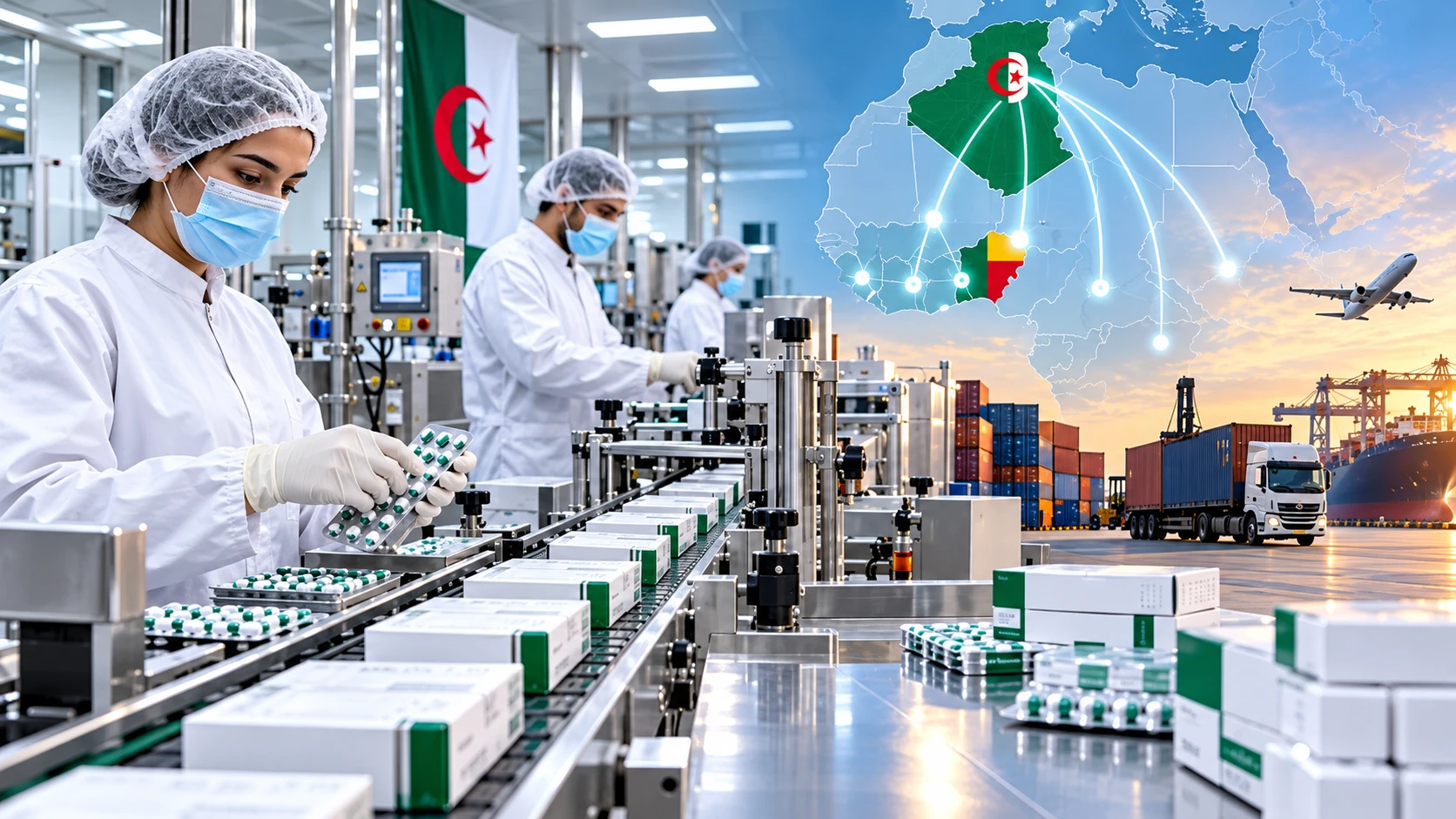
Over the past twenty years, the Algerian pharmaceutical industry has grown considerably, and it now makes a major contribution to meeting the country's medicine needs. Algeria has around 200 production units, which manufactured more than €2.5 billion worth of medicines in 2022. Local production covers nearly 70% of the need for generic medicines, while the remaining 30% mainly concerns innovative products, which are harder to develop. These results place Algeria among the leading pharmaceutical producers on the African continent.
A promising strategy
Between 2019 and 2022, national pharmaceutical laboratories posted encouraging results, both in generics and in originator medicines. Several companies, including Saïdal, El Kendi, Biopharm, Pharmalliance, Merinal and other laboratories, help meet local demand in both quantity and quality. The growth of the pharmaceutical market, particularly strong between 2021 and 2022, has also generated surpluses for some products. This opens export prospects towards Africa, then the Middle East, Asia and Europe.
Internationalising the sector, however, requires a structured strategy. According to expert Mohamed Nibouche, the priority is to bring manufacturing and distribution sites up to international standards. This would create a genuine Algerian pharmaceutical label, able to strengthen the confidence of foreign partners. It must also go hand in hand with the development of human skills and with regulations that encourage the production of medicines intended exclusively for export. Algeria could thus become a regional hub for pharmaceutical production and distribution serving African markets.
The public authorities have already taken several steps to support this ambition. The creation of the National Agency for Pharmaceutical Products (ANPP) is an important milestone in modernising the management and regulation of the sector. The existence of a ministry dedicated to the pharmaceutical industry also shows the strategic importance given to this field. The National Union of Pharmacy Operators (UNOP) is likewise working with the authorities to develop exports and make medicines a driver of economic diversification beyond hydrocarbons.
A stronger presence
International cooperation is another key lever. In May 2022, the El Djazair Healthcare exhibition, held in Dakar, brought Algerian and Senegalese institutions closer together. An agreement between the two regulatory agencies notably simplified the registration and audit procedures for production facilities. In June 2023, at the International Pharmaceutical Forum also held in Dakar, twenty Algerian operators met industry professionals and raised their regional profile. In November 2023, a draft agreement between the ANPP and the Malian pharmaceutical authorities was also considered, to ease mutual recognition and the marketing of Algerian medicines.
A supporting policy
Despite this progress, several obstacles remain. In 2022, Algerian medicine exports amounted to the equivalent of $50 million, a still modest figure given the country's industrial potential. Companies face difficulties related to red tape, administrative authorisations and the economic environment. An efficient banking system and better institutional support are essential to facilitate their operations abroad.
Finally, improving competitiveness requires tackling irregular practices, including invoicing irregularities, the import of unregistered medicines, dumping and deliberately caused shortages. Strengthening pharmacovigilance is also necessary to guarantee the quality and safety of products.
In conclusion, the internationalisation of the Algerian pharmaceutical industry is a major opportunity for economic growth and continental influence. Its success will depend on product quality, compliance with international standards, simpler procedures, regional cooperation and lasting support from the public authorities.